

 Lockout help
 Home locks
 Business locks
 Car access
 Car keys
 Rekeying
 Lock repair
 Garage doors
01
Describe the action, not the diagnosis
Useful descriptions include a key that will not enter fully, a handle that moves without releasing the latch or a bolt that will not extend when the door is closed. Say what happens during ordinary use and when you first noticed the change. If the symptom comes and goes, explain the circumstances instead of repeatedly testing it with more force.
Mention whether another existing key behaves differently and whether anything is visibly loose, bent or broken. Do not push tools into the keyway or dismantle the lock to find an explanation. If access is already blocked, combine the repair enquiry with lockout help so the immediate problem is understood.
02
The frame belongs in the conversation
A mechanism can appear to work while the door is open yet resist when the door is closed. Tell us if ordinary use involves lifting the door, leaning on it or pulling it hard into position. That information suggests the closing relationship needs attention; it does not establish a diagnosis from a distance.
Replacing a cylinder alone may leave the same closing problem. Explain both the key movement and the latch or bolt movement so the proposed work addresses the right part of the entrance. Avoid accepting an awkward closing routine as the intended outcome simply because the key can eventually be made to turn.
03
Choose a result before choosing hardware
The aim might be reliable operation, replacement of damaged hardware or a change in who holds a working key. Each concern deserves to be named. Rekeying addresses key control on suitable locks; repair or replacement addresses a different set of condition and fit questions. More than one may be relevant to the same door.
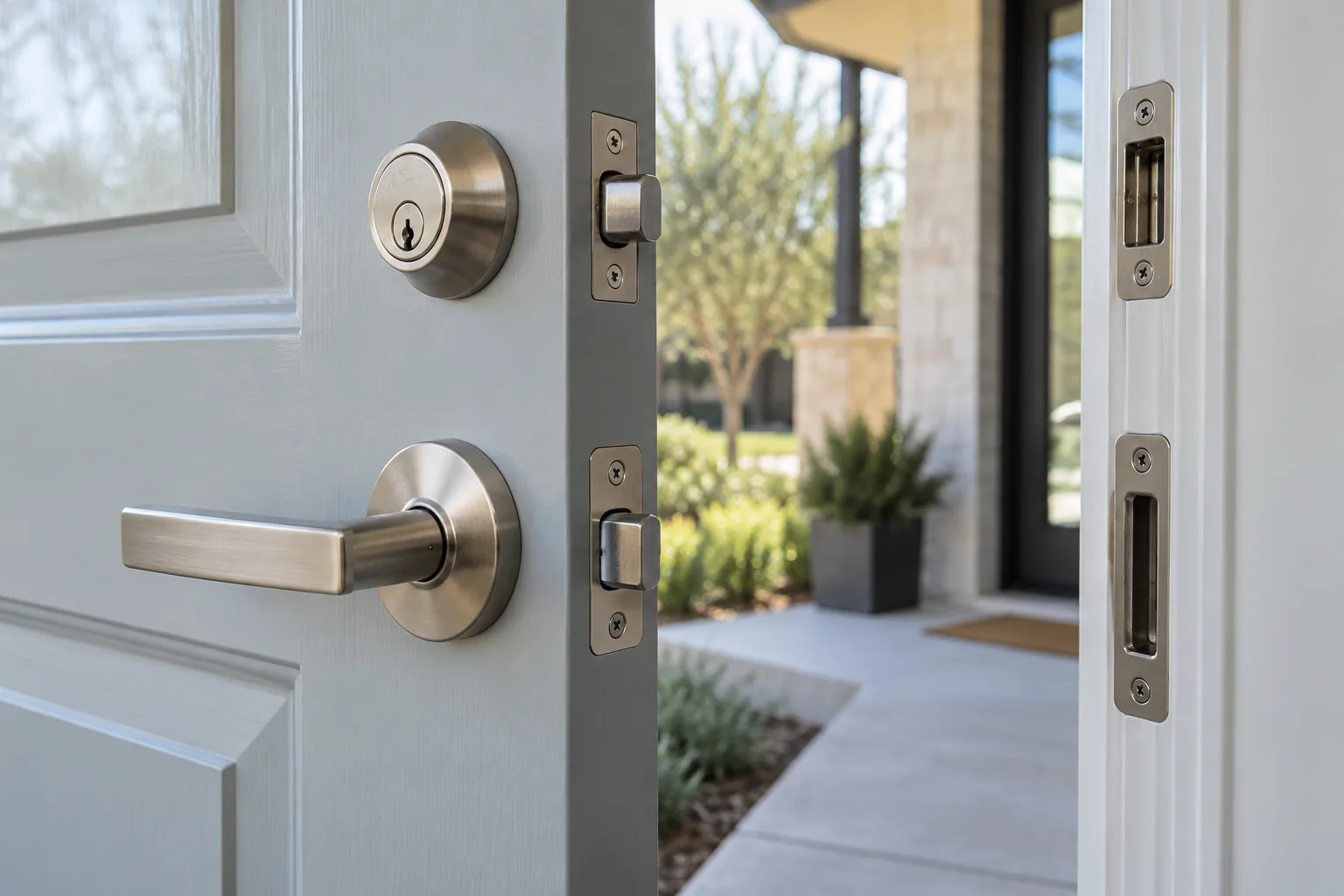
If you want to retain a visible handle, finish or other existing component, mention it before planning replacement. Photos of both sides can help explain the arrangement, but measurements and compatibility still need confirmation. No particular product or repair outcome should be assumed solely from an exterior photograph.
04
Identify the entrance and its decision-maker
For a Farmers Branch business near Bee Street, give the suite and specify the customer, staff or shared-corridor door. For a home, say whether the affected door is private or communal. The person authorized to approve a change may be a property manager or landlord rather than the person who first noticed the fault.
Call 469-484-6619 with the address, door description and symptom. Discuss availability, the proposed assessment and the basis for charges before agreeing to work. Business keyholder questions are covered on the commercial locksmith page; household handovers are covered under home locks.